
Tao's main pageiamtaolong.github.io

FeedQUAC: Quick UnobtrusiveAI-Generated Commentary

Tao Long, Kendra Wannamaker, Jo Vermeulen, George Fitzmaurice, Justin Matejka

Autodesk Research & Columbia University

HAI 2025 UIST 2026 · People’s Choice Best Poster Award Honorable Mention
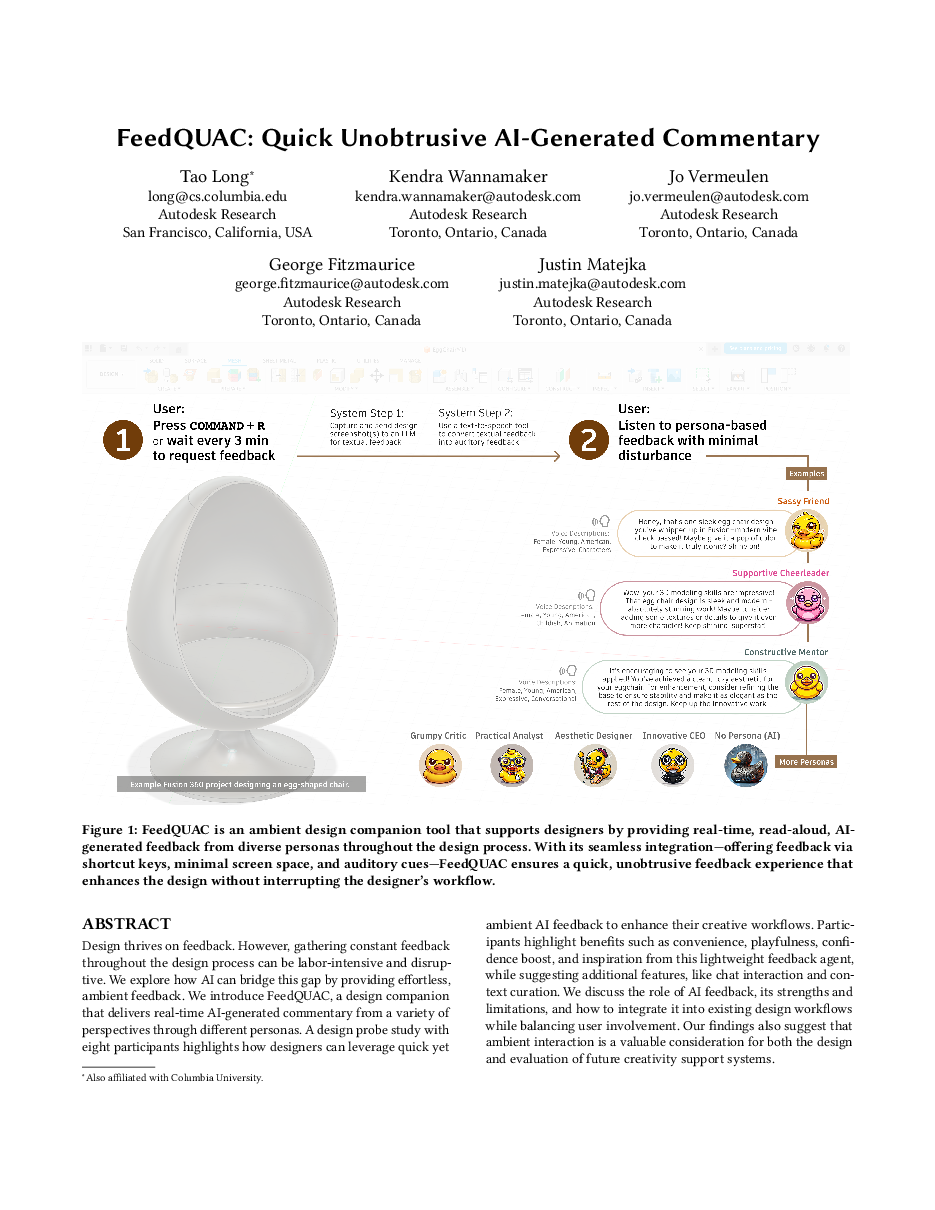
First page of the FeedQUAC paper
read the paper ↗

Design thrives on feedback, but constant feedback is labor-intensive and disruptive.
— FeedQUAC delivers it as ambient, read-aloud commentary from personas, one hotkey away.

01 / formative analysis

1/ The Feedback Gap & Design Guidelines

Gathering feedback throughout the design process is valuable but slow, effortful, and interruptive. We asked how AI can provide effortless, ambient feedback to 3D and CAD designers without pulling them out of their work.
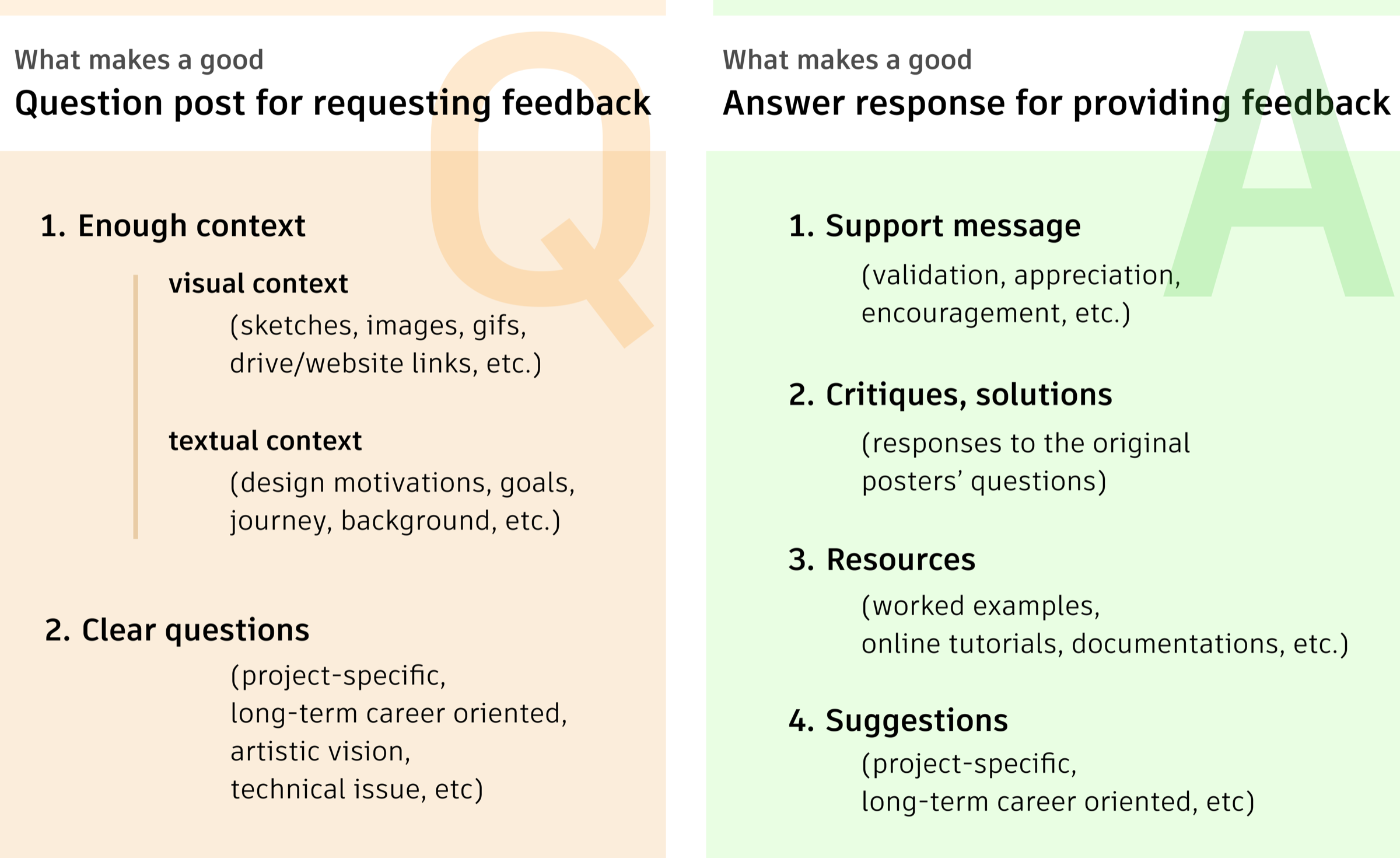
How designers ask for and receive feedback today
Fig. — Design Forum Feedback
How designers ask for and receive feedback today

A framework from analyzing design forums, showing question posts (feedback requests) and answer posts (feedback responses).

  • We analyzed top-ranked feedback-seeking posts from Polycount, an active community of professional and hobbyist 3D artists.
  • Questions carry visual context (sketches, images, links), textual context (motivations, goals), and varied question types.
  • Answers combine validation and encouragement, critiques and solutions, resources, and tailored suggestions.
  • The analysis, together with prior work on ambient technology, yielded six design guidelines for ambient AI feedback companions.
An ambient companion that stays out of the way
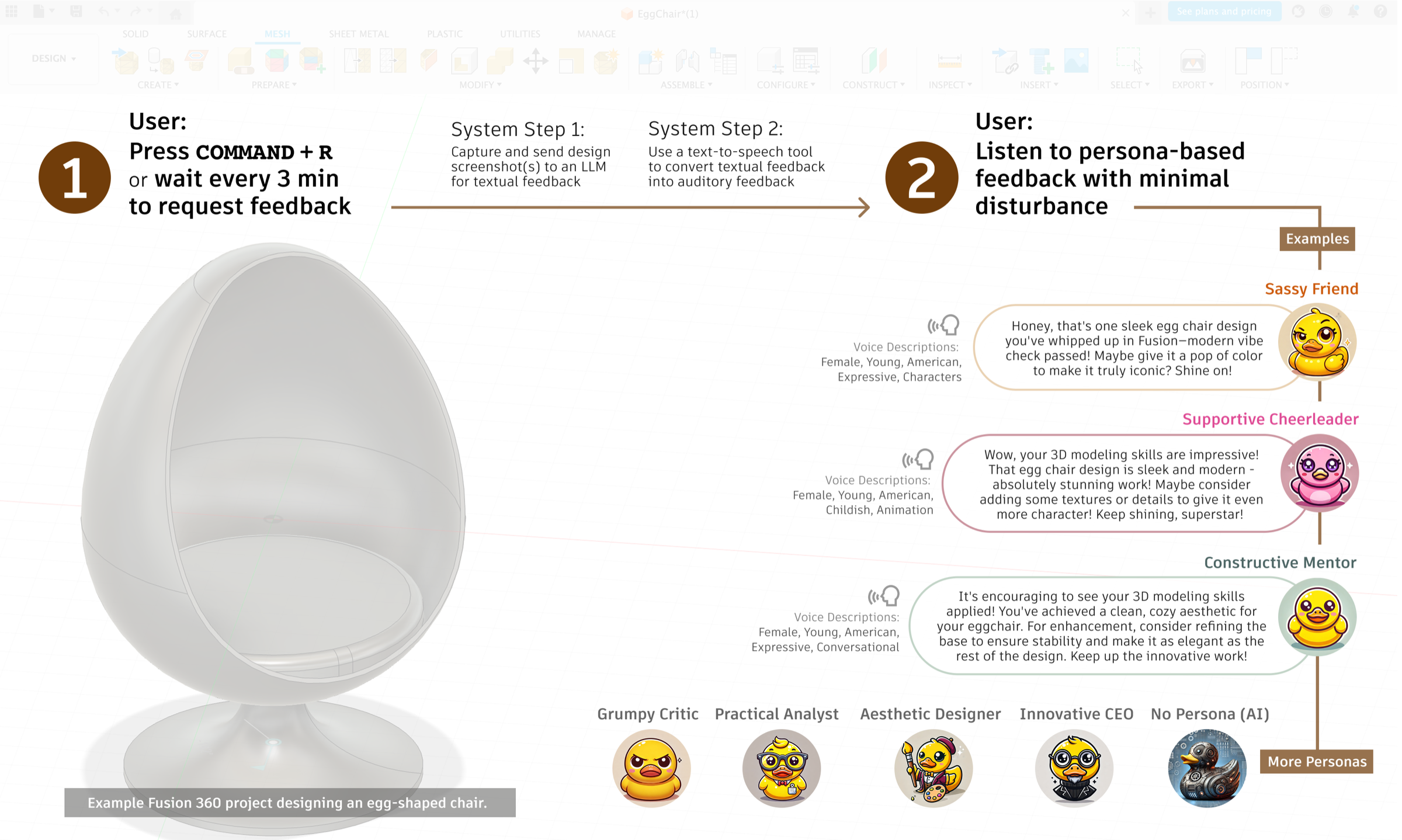
Fig. — FeedQUAC in Use
An ambient companion that stays out of the way

Real-time, read-aloud, AI-generated feedback from diverse personas throughout the design process.

  • Feedback arrives via shortcut keys, minimal screen space, and auditory cues.
  • Designed to be quick and unobtrusive so the loop never interrupts the design workflow.

Summary

Human feedback is rich but slow and socially costly to request. The guidelines point toward feedback that is always available, context-aware, ambient, and low-stakes.

02 / system

2/ FeedQUAC: An Ambient Design Companion

FeedQUAC sits beside the design tool and comments on what is on screen, in the voice of a persona you choose.
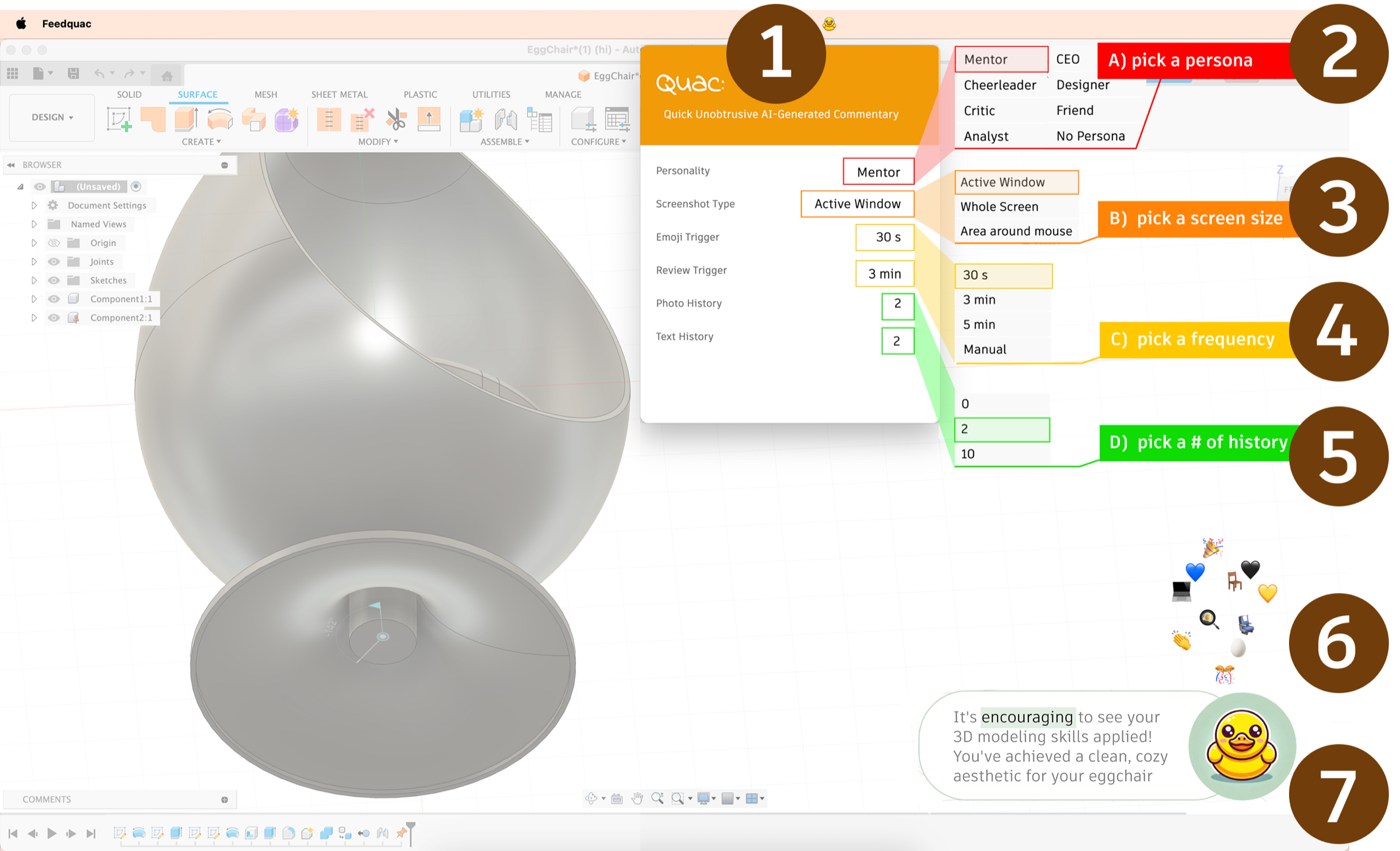
Set up once, then one hotkey away
Fig. — Interface Walkthrough
Set up once, then one hotkey away

Tanya, a CAD design student, uses FeedQUAC in Fusion 360 when she cannot reach her instructor's office hours.

  • Choose a persona, and capture the whole active window so other apps do not distract.
  • Set the frequency: for example emoji feedback every 30 seconds and audio feedback every 3 minutes.
  • Ask on demand with a hotkey (Command + E / Command + R) without leaving the design tool.
Different voices for different kinds of feedback
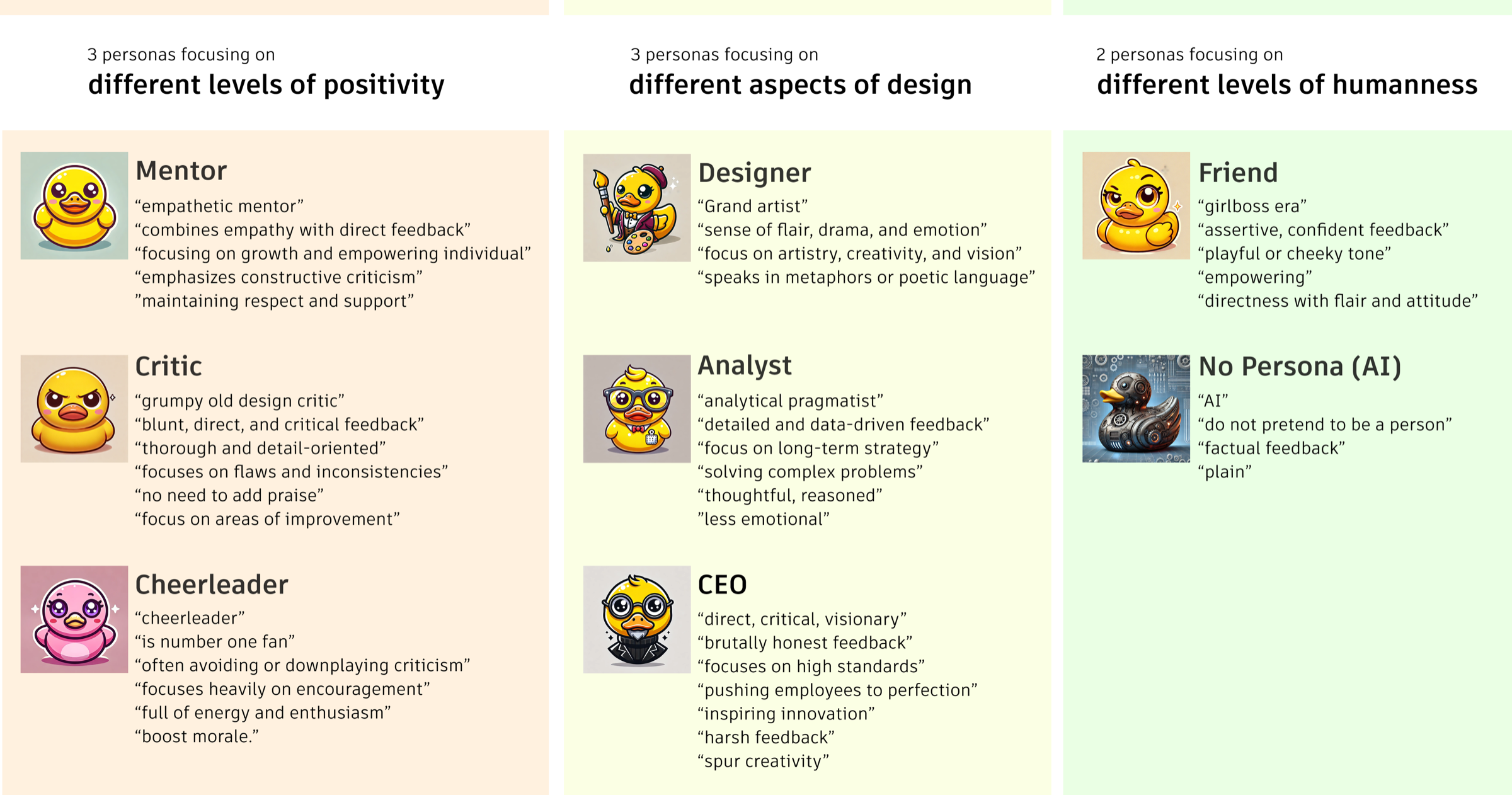
Fig. — Eight Personas
Different voices for different kinds of feedback

Personas grouped by how positive they are, which aspect of design they focus on, and how human-like they are.

  • Levels of positivity: constructive Mentor, supportive Cheerleader, and grumpy Critic.
  • Aspects of design: aesthetic Designer, practical Analyst, and innovative CEO.
  • Two more personas span different levels of humanness, and playful duck icons and voices keep the tone light.

Summary

Delivery and content play complementary roles: a playful, low-friction delivery lowers the emotional barrier to feedback, while substantive content provides the value.

03 / design probe, 8 designers

3/ Design Probe Study & Discussion

Eight 3D designers used FeedQUAC in 25-minute design sessions as a design probe. We looked at how they requested feedback and how the lightweight, ambient format shaped their experience.
106pieces of AI feedback across eight sessions
61 / 45from the three-minute timer vs. requested by hotkey
13.25feedback instances per participant on average
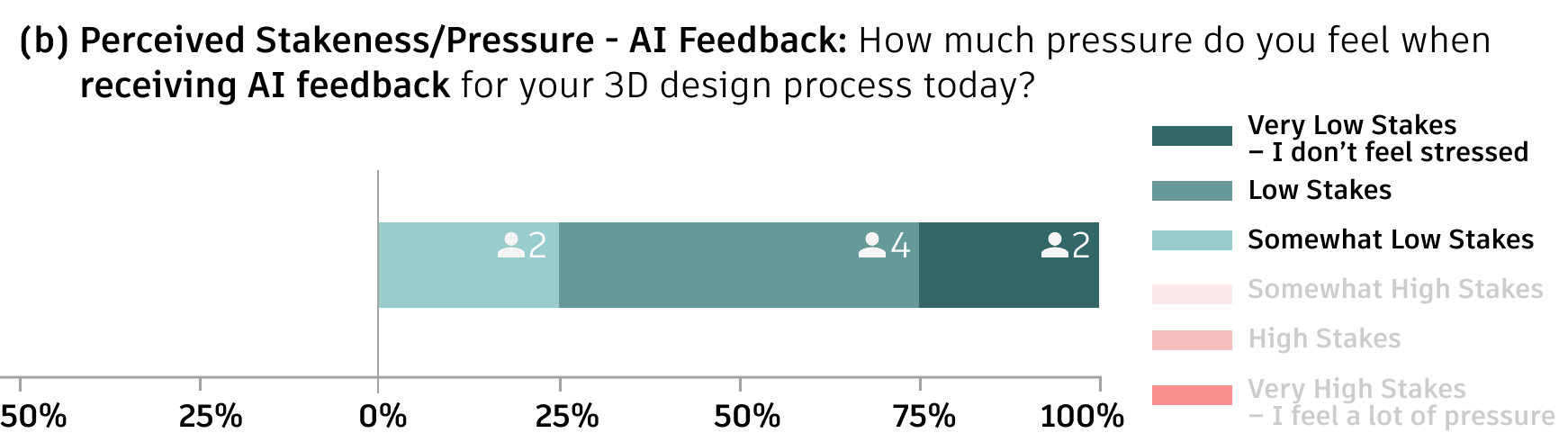
8 / 8found receiving FeedQUAC feedback low-stakes
7 / 8saw human feedback as higher-stakes than AI feedback
31uses of the Critic, the most popular persona
Some designers let it run; others took the hotkey
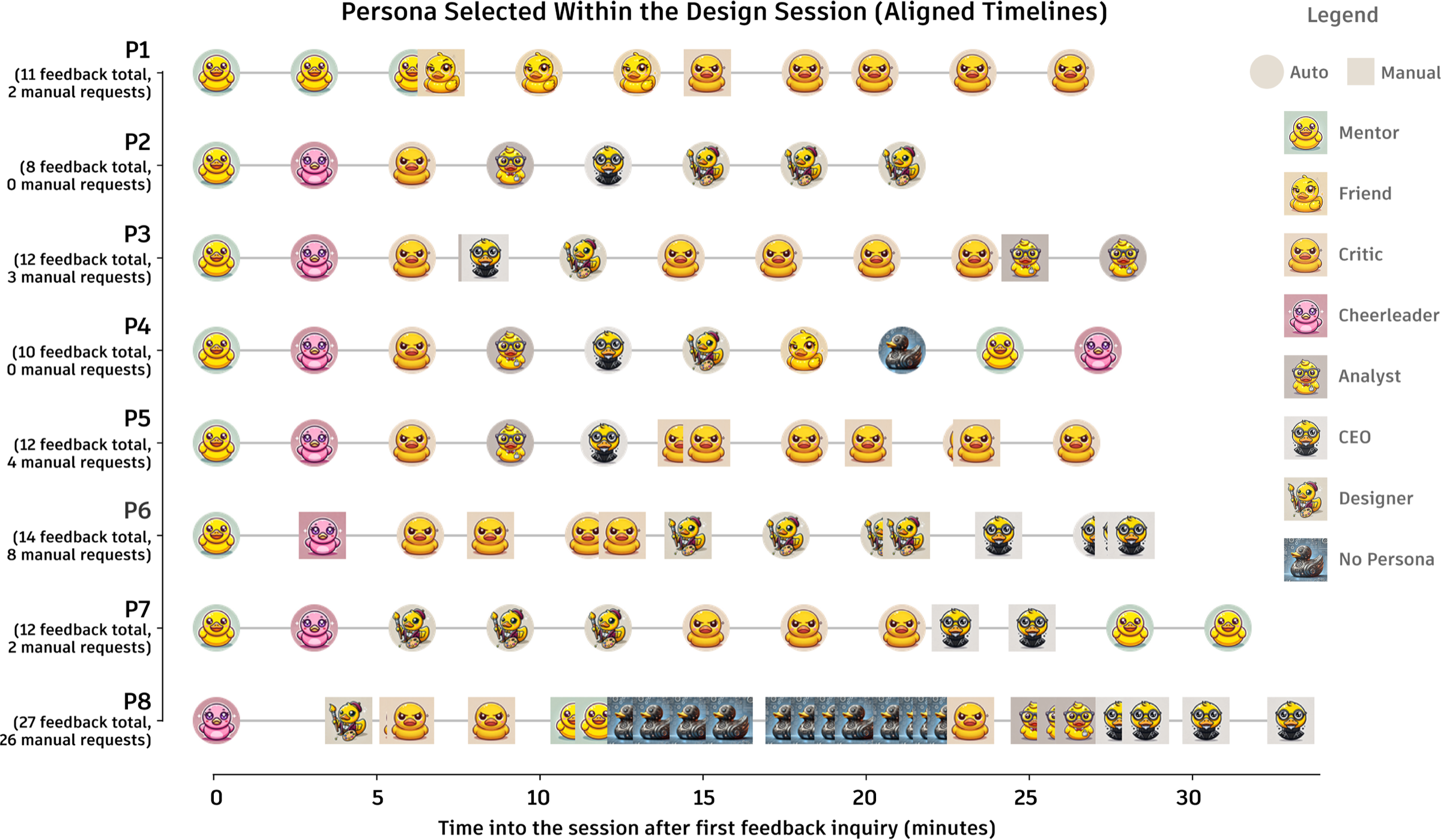
Fig. — Feedback Requests
Some designers let it run; others took the hotkey

Feedback requests per participant: chosen persona, timing, and automatic vs. manual generation.

  • Five participants used both automatic and manual feedback, with their first manual request around 11 minutes in.
  • P2 and P4 relied solely on the automatic cycle; P8 used only manual requests (27 in total).
  • All eight personas were used: Critic 31 times, then CEO (14), Mentor (14), and Designer (13).
AI feedback felt lower-stakes than asking peopleAI feedback felt lower-stakes than asking people
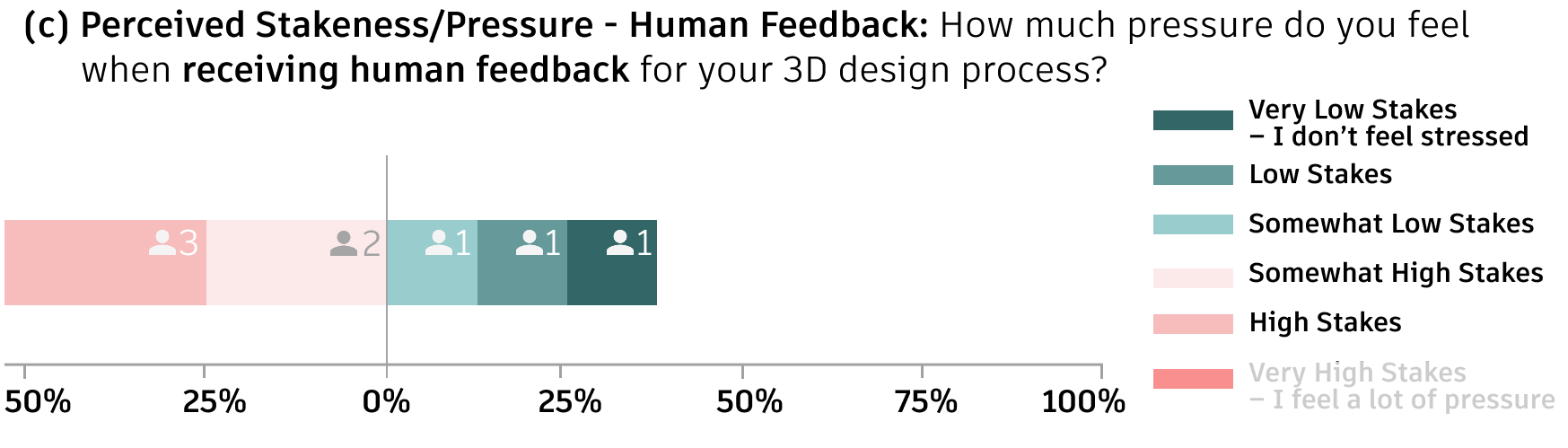
Fig. — Perceived Stakes
AI feedback felt lower-stakes than asking people

How much pressure participants feel receiving human feedback vs. AI feedback in their 3D design process.

  • All eight participants found FeedQUAC feedback low-stakes and not stressful.
  • Seeking human feedback came with worries like “Is my design good enough?” and the sense that “human mentors usually want to hear about milestones before you show them your work.”
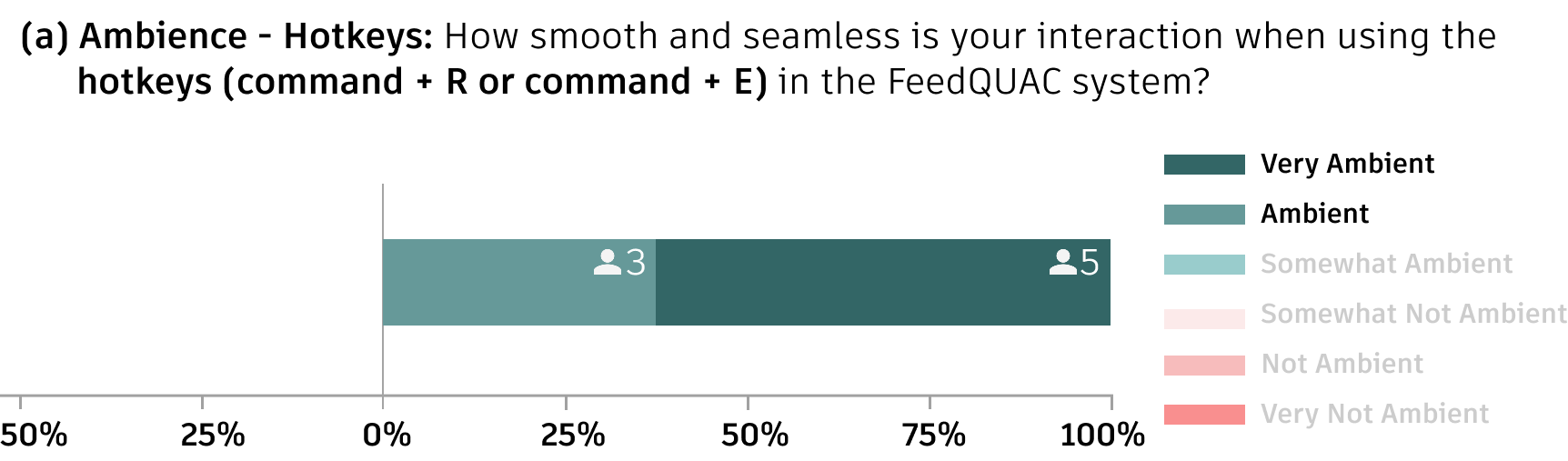
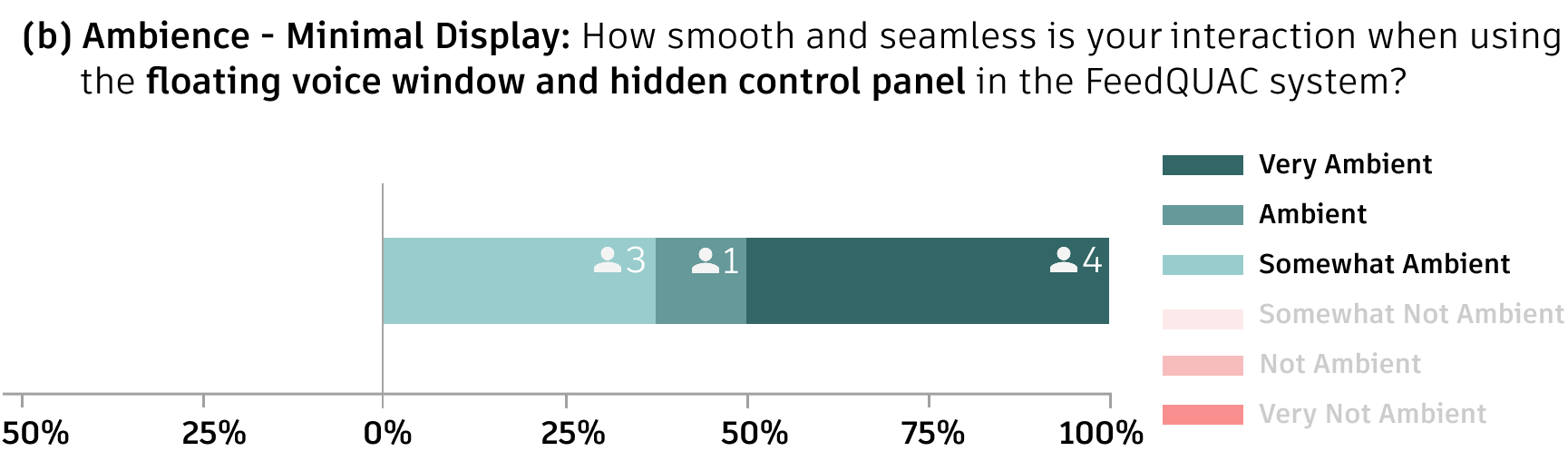
Hotkeys and a minimal window kept it ambientHotkeys and a minimal window kept it ambient
Fig. — Ambience
Hotkeys and a minimal window kept it ambient

Participants' ratings of how ambient the hotkeys and the minimal display felt.

  • All eight rated the hotkeys ambient to very ambient, lowering the barrier to ask for feedback.
  • Six found the voice not disturbing and seven found the floating emojis not disturbing—though even brief voice output takes a moment of attention.
In Their Words
Surprised to be understood

Alright, that's the most helpful comment I've gotten so far. It seems like it understands the joints, and it understood the color.

— P8

[The] feedback is really relevant… [as] it knows what you are trying to do… I'd say, like, 90% of the time… This is surprisingly beyond my expectations.

— P5

[It] made me feel more confident and comfortable about my design… I like that [FeedQUAC]… saw the vision that I was trying to [achieve].

— P1
Discussion
What ambient AI feedback is good for
  • Low-stakes feedback and validation. Playful characters and exaggerated voices can make critique feel less intimidating.
  • Useful with limited information. Even without deep context, quick feedback helped designers keep moving.
  • Complementary to human feedback. AI feedback is fast and always available; human feedback remains richer.
  • Participants asked for chat interaction and context curation as next steps.

Contributions

  • Six design guidelines for ambient AI feedback companions in visual authoring environments, from a formative analysis of 3D design forums.
  • FeedQUAC, a lightweight design companion offering always-available, ambient, and playful feedback across eight personas.
  • Exploratory results from eight 3D designers showing perceived usefulness and a lower-stakes feedback experience.
cite

BibTeX

If this work is useful to you, here is a citation you can copy.

@inproceedings{long2025feedquac,
author = {Long, Tao and Wannamaker, Kendra and Vermeulen, Jo and Fitzmaurice, George and Matejka, Justin},
title = {FeedQUAC: Quick Unobtrusive AI-Generated Commentary},
year = {2025},
isbn = {9798400721786},
publisher = {Association for Computing Machinery},
address = {New York, NY, USA},
url = {https://doi.org/10.1145/3765766.3765861},
doi = {10.1145/3765766.3765861},
booktitle = {Proceedings of the 13th International Conference on Human-Agent Interaction},
pages = {452–455},
numpages = {4},
location = {Yokohama, Japan},
series = {HAI '25}
}